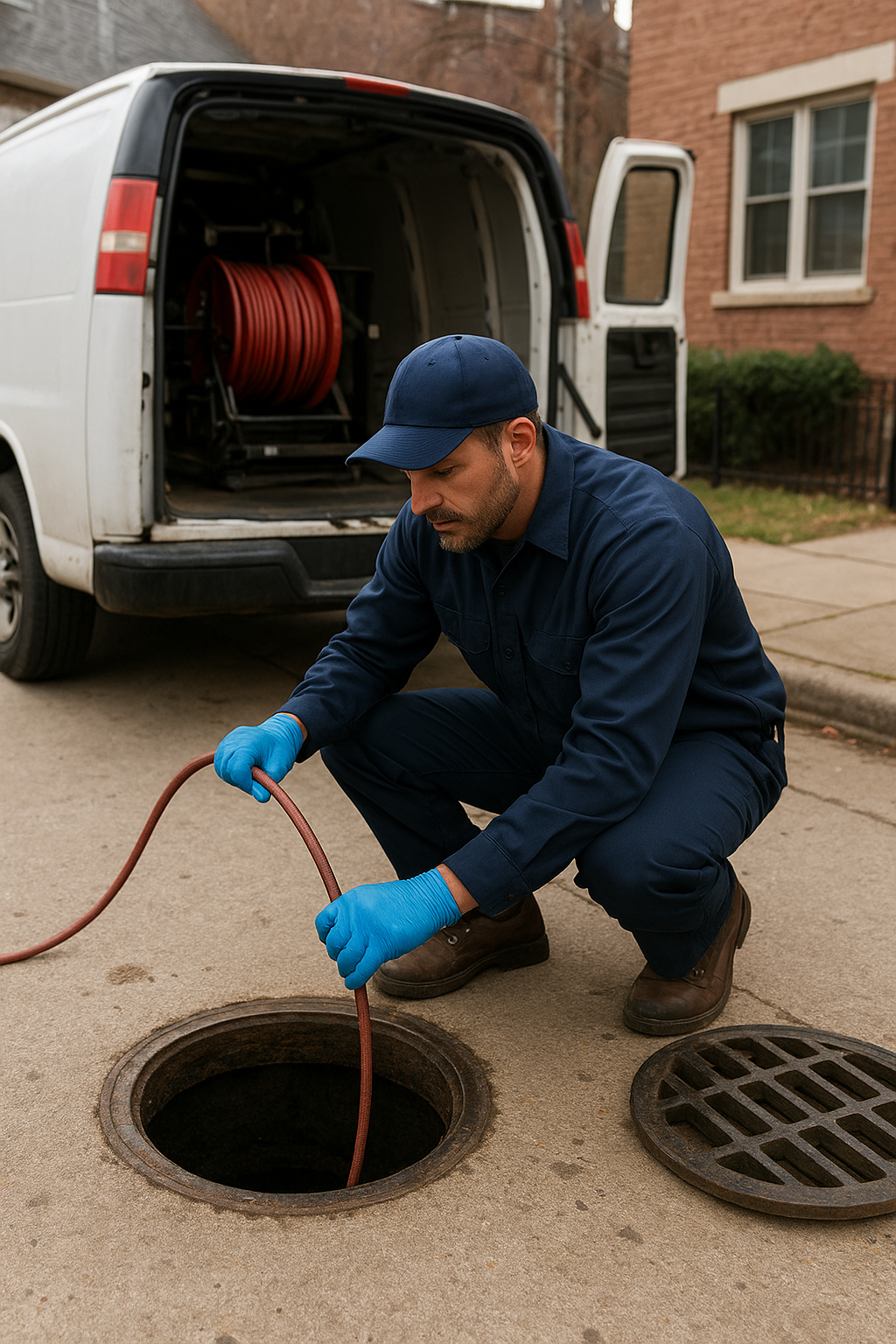
Houston's subtropical climate brings sudden downpours that overwhelm older clay and cast-iron lines common in Heights and Midtown homes built before 1960. When a main line backs up into a tub or floor drain during one of these events, water can rise quickly because the flat terrain offers little natural slope for runoff. Technicians responding to these calls often start by isolating the affected section rather than running a full cable the length of the property, since many River Oaks and Montrose homes sit on narrow lots with shared laterals.
Tree roots from live oaks and pecans push into joints during the mild winter months when soil moisture stays high. In neighborhoods like the Heights, where original sewer lines still run under brick streets, a single root intrusion can create a complete stoppage within hours after a storm. Emergency crews carry sectional machines sized for 4-inch and 6-inch lines because full hydro-jetting rigs cannot always reach rear yards without damaging landscaping or passing through finished interiors.
Downtown high-rises and Midtown apartments add another layer: vertical stacks that feed multiple units can back up from a single grease slug or flushable-wipe mass. Clearing these requires coordination with building maintenance to avoid flooding lower floors, and crews must verify flow all the way to the city main in Harris County before leaving the site. Homeowners in nearby Sugar Land and Pearland face similar issues but on newer PVC laterals that still collect construction debris or shifted fittings after heavy rain.
The key difference in emergency work versus scheduled calls is confirming the stoppage location before any cutting or jetting begins. In older Harris County homes, multiple cleanouts may exist at different elevations, and choosing the wrong one wastes critical time. Experienced operators use a camera first on every after-hours job to map the exact distance and depth, preventing unnecessary excavation in tight urban lots.
Technician insight
In Houston the thing that catches most people out with Emergency Drain Cleaning is the flat grade and clay soil around the Heights and Montrose. Roots from mature oaks move into old cast-iron joints during our mild winters, then a single heavy rain finishes the job. Homeowners often try plungers or store-bought chemicals first, which only packs the material tighter and forces us to cut farther down the line than if we had reached the cleanout right away.
Evening Backup Near Minute Maid Park
A Midtown duplex reported water rising in the hall bath during a summer storm. Camera inspection from the front cleanout showed a root mass 38 feet toward the street where an old clay joint had separated. Sectional machine cleared the intrusion, camera confirmed flow to the city main, and the owner was advised to schedule annual maintenance before the next wet season.
Emergency Drain Cleaning Services We Offer
✓Main Line Emergency Clearing
Locates and removes complete blockages between the house cleanout and the street connection, common after heavy rain in Montrose and Heights.
✓Kitchen Grease Backup Response
Clears sudden kitchen sink and disposal clogs caused by cooking oils that solidify in cooler pipe sections during Houston winters.
✓Bathroom Overflow Unclogging
Handles tub, shower, and sink backups that threaten to flood finished floors in older Midtown and Downtown properties.
✓Toilet Emergency Service
Removes obstructions preventing toilet use, often from non-flushable items or root intrusion in River Oaks and Heights homes.
✓Outdoor Drain and French Drain Clearing
Restores flow in yard drains and perimeter systems that back up during subtropical storms in Katy and Sugar Land subdivisions.
Emergency Drain Cleaning Cost in Texas
| Service | Typical Range | What Affects It |
|---|---|---|
| Single Fixture Emergency | $175–$325 | Kitchen or bath sink in accessible location |
| Main Line Emergency | $275–$550 | Includes camera locate; higher if multiple cleanouts needed |
| After-Hours or Weekend Call | $75–$150 added | Applies outside standard daytime hours |
| Hydro-Jetting Add-On | $150–$300 | Used when roots or heavy grease are present |
Ranges are typical for Texas and confirmed with an exact written quote before any work starts.
How it works
- 1
Initial Assessment
Gather details on which fixtures are affected and any recent weather or construction activity near the property.
- 2
On-Site Arrival
Technician reaches the address with sectional machines and camera equipment sized for Houston's typical 4-inch and 6-inch laterals.
- 3
Camera Location
Run a camera from the nearest cleanout to identify the exact distance, depth, and cause before any mechanical clearing begins.
- 4
Clear and Verify
Remove the obstruction, then re-inspect to confirm flow reaches the city main in Harris County.
Pricing
Upfront quote given after camera inspection; price depends on access, line size, and whether excavation is required.